Old Car Rebellion

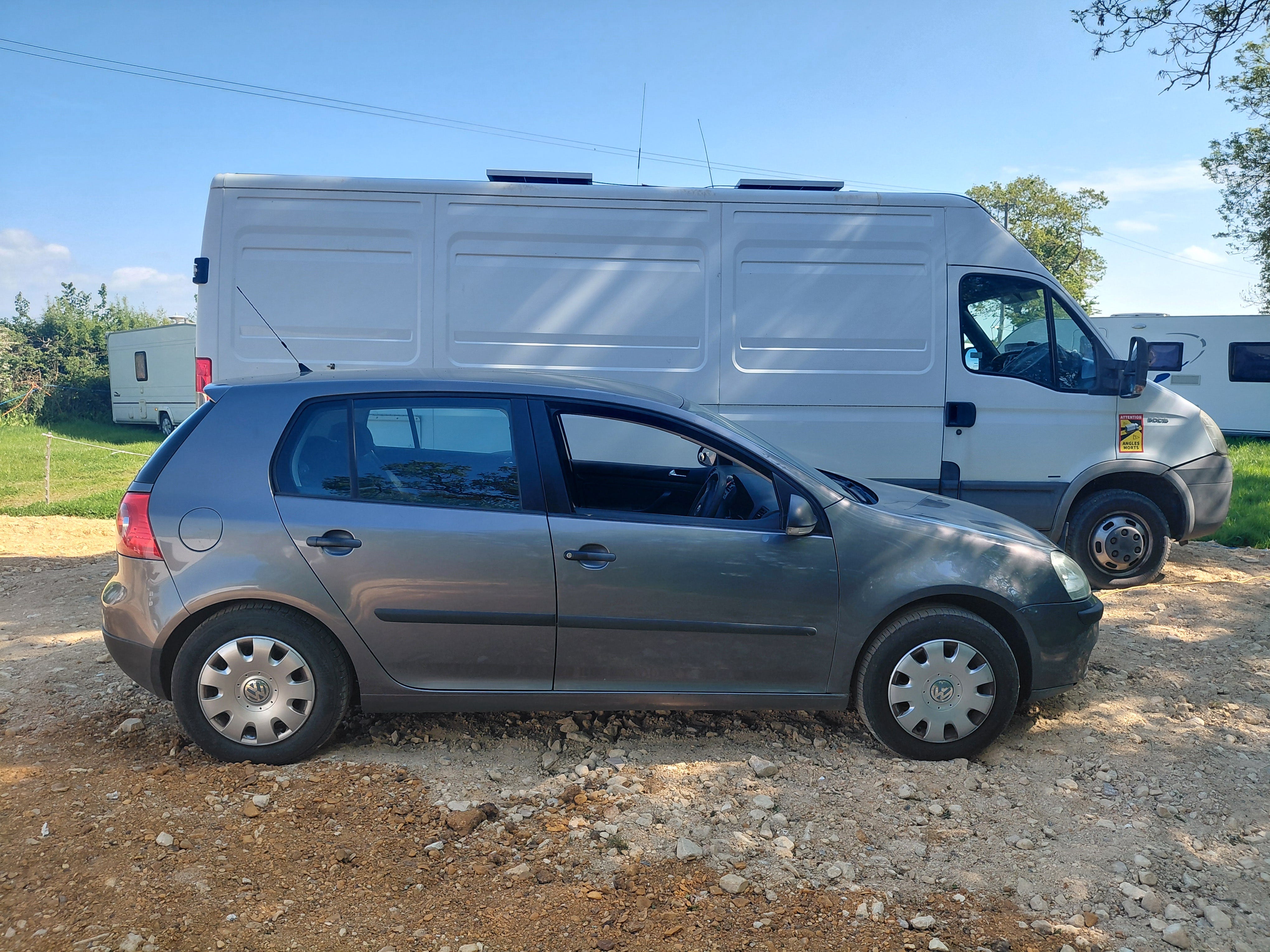
For around the price of a single monthly payment on a new top-end Tesla, I just bought an entire 2007 VW Golf. My van is great, but it’s a bit of a tank for actually getting around in, so I had my antenna up for a cheap runabout. My process for buying old vehicles hasn’t changed much in the last 35 years:
Don’t go looking for a specific vehicle, i.e. make, year, model. Buy more on condition than spec or features.
You don’t have to spend your entire budget. The right car might actually be half or a third the cost of your upper limit.
Origin does have slight bearing - French and Italian cars have a poor reputation for a reason - but not much. A well cared for Fiat is better than a BMW that has been abused.
Look local. There’s no point travelling across the country for a cheap car. Once you’re open to almost anything, something will be available nearby, and you’ll save a lot of hassle if you can walk over to collect it.
Look at the paperwork as much as the car. Lots of nice dealer stamps in the service book are worth much more than shiny paintwork. And a registration that’s not the address you are at is definitely a sign to walk-away.
Also look at the seller as much as the car. Older people, or a family, beats some young person. Are they coming up with strange answers? Does their place look nice and tidy? Are they trying to force a sale? (Yes, I probably wouldn’t buy a car from myself…)
Although, you can never truly tell… I think this is a good place for this Dutch VW ad:
But these policies have served me well over the years. A couple of highlights:
The £90 Honda 250 ‘bike I bought from a house clearance in the nineties. After some very minor fixes, I used it for courier work, where it earned 5x it’s own price every week.
The £525 BMW 3 series, with one of the smaller engines, but all the M-Sport options. Useful for a years commuting, great fun to drive, needed hardly anything spent on it, and sold for a small profit.
But best of all was the 1989 Honda Accord ‘Aerodeck’ - quite an unusual car - which I only needed temporarily because, for a while, I needed something more practical than the Mazda coupe I had. Advertised in the local paper, it was for sale just 10 minutes walk away. All the boxes were being ticked just approaching the house: neat front lawn and hedge; check, nice house; check, the other car in the driveway was a clean and well maintained looking Rover; check. And, aside from a touch of rust, the Honda looked immaculate as well.
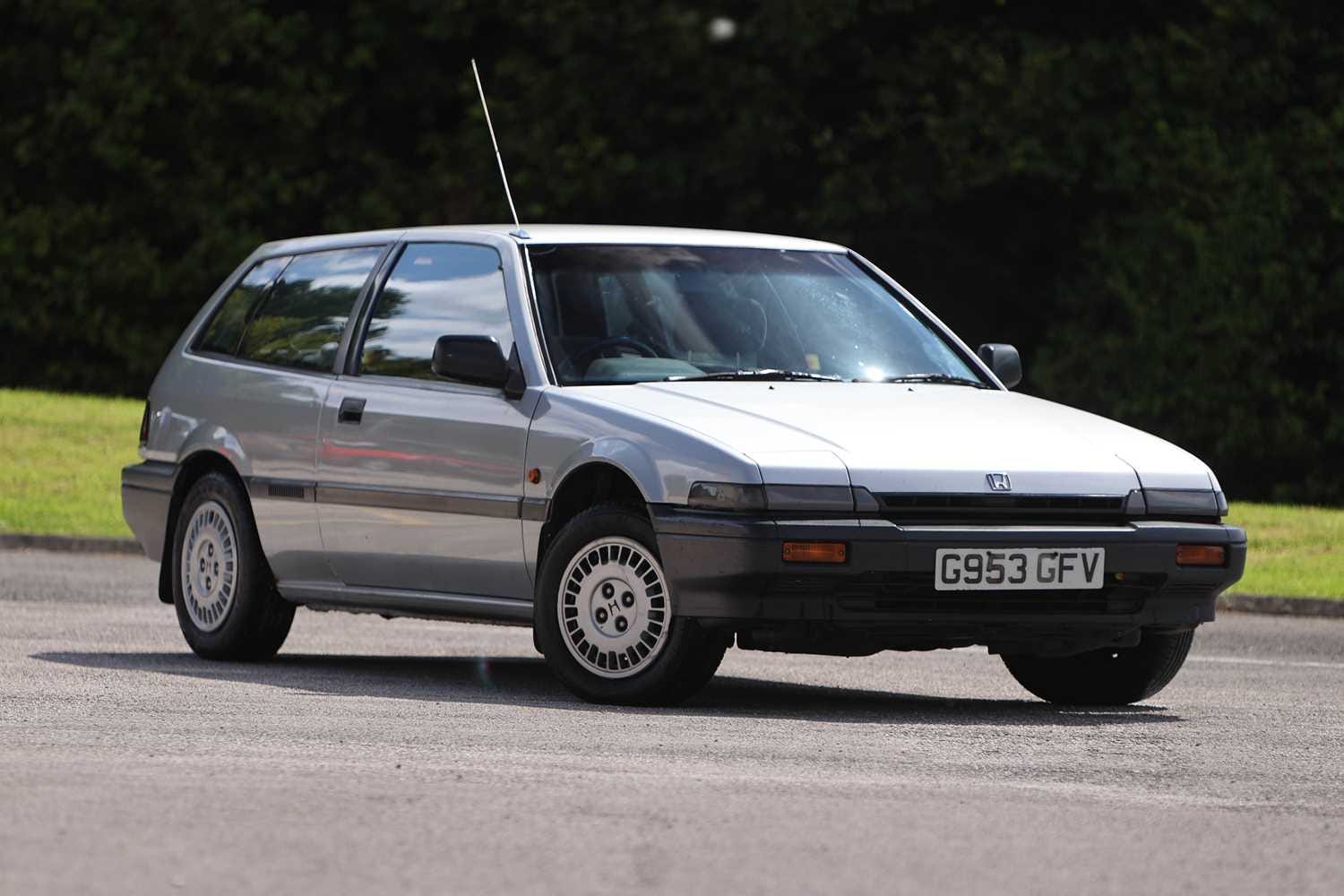
As the front door opened, it got even better. An older couple, in their seventies. Very polite, very tidy looking home. It was a two owner car, but they’d had it from almost new. I asked if there was a service history, and was presented by a massive folder that could’ve been the MS for The Lord of The Rings. Even back then it was an 18-year old car, but everything had been kept, all neatly in order, showing the car had been meticulously maintained. There was even a little notebook where they had written down almost every time they had filled up with fuel… The old gent apologised that they might have missed some…
I drove it around the block and of course it drove like it was almost new. This was a unicorn, a fabled creature; a Honda owned effectively from new by a careful old couple who had maintained it cost-no-object. But, over the cup of tea they made me - as if I needed to be won over - the old gent, with great seriousness, leaned forward and said “look, I know you’re good to beat me down on price”. And to this day, I feel guilty for knocking 25 quid off the asking price. And what was the asking price for this minor gem…?
£375…
So I kept it for a few months, used it for a holiday, and then, because it was a very unusual body-style, put it up for a sale in an enthusiasts publication. The young guy who I bought it me he had been looking for one for almost a year… Again, I feel kind of guilty… because I almost doubled my money…
But anyway, what is the point of all this? Apart from the fact that I sit here with a keyboard on my lap, and can’t stop myself from telling stories…
And why is the word ‘rebellion’ in the title…? Well it is kind of not how things are expected to be done. I get the impression that there are certain powers that be that would rather I’d get into debt to get a newer car. And, indeed, get into debt to buy almost anything else.
It’s very tempting sometimes. I look at my income, look at what is available, and say to myself ‘yes, I can afford that per month’. And, wow, look at all these shiny things…
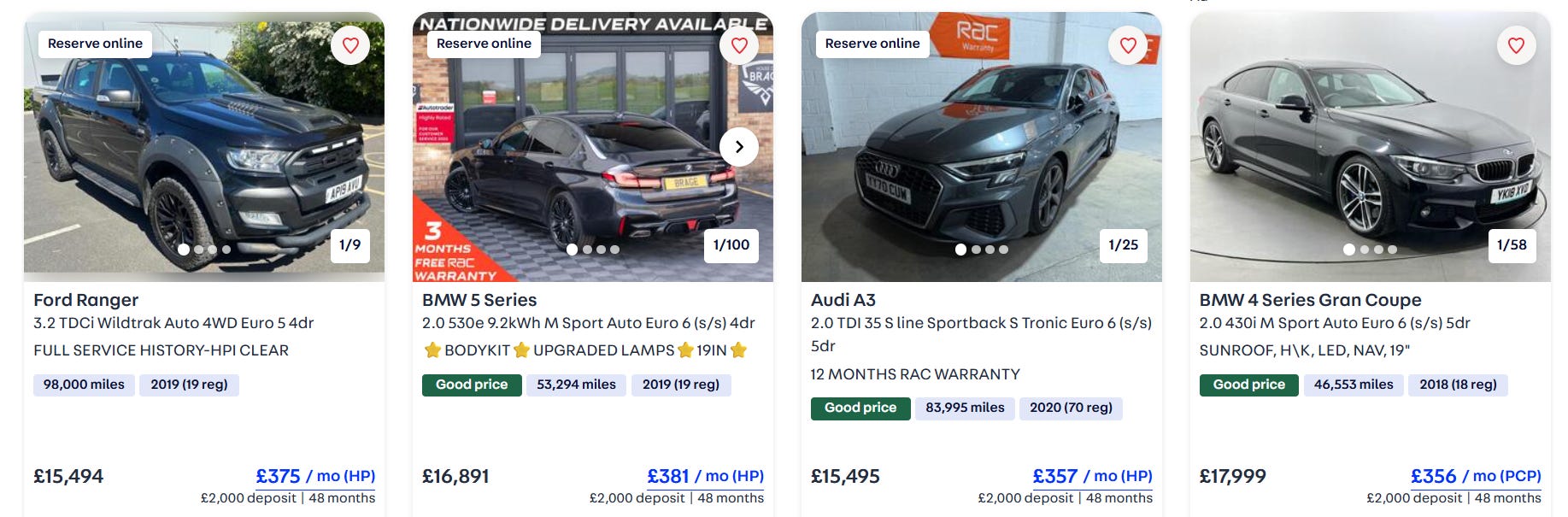
Yes, but I could also handcuff myself to a radiator for 4 years… I was giving a ride to a colleague the other day, and he was telling me about his adventures in car purchasing. He, like me, likes his cars, and he has a fine taste in vehicles, having had things like high spec BMWs and Audi RS7s. But he had been suckered into a chain of different purchases, all on credit, transferring the debt from one depreciating vehicle to another, and it became clear he was going to have these large commitments for many years to come.
I understand the broader arguments for spending on credit, and I understand that money itself is credit. Without spending, the economy goes bad, if the economy goes bad, we all suffer. And spending pushes technology; credit means more car sales, more sales means manufacturers have more to spend on research and development, which means better cars. And I like cars, and technology in general, so I should be in favour of credit.
Well, it’s debatable whether recent cars are any better than they were a few years ago. But, on a personal level, I just appreciate the freedom. I was just talking to a few other guys who, like me, live out of their vans or caravans. We are all, in relative terms, and for want of a better term, poor. But we also all have a certain sort of freedom. Now, you’re going to have to excuse my language here, but Nassim Taleb talks about having “fuck you money”, the point being that you hit a certain amount of wealth and it means you are no longer constrained by the expectations of others. I’d suggest that “fuck you money” is actually the point where you decide to not be constrained by expectations, and are willing to bear the cost. Things like van-life and making up front cash purchases are a way for mortals like me of bringing the “fuck you” price-point down.
Debt, if it’s not immediately payable, is the opposite. It is more like “go ahead and fuck me” money. It constrains your optionality of how you use your time and how you interact with others. “I owe, I owe, it’s off to work I go” is a truism, your boss has more sway over you the more you need your job, and the greater your financial commitments the more you need it. More than that is the fact the debt means that the money lender is monetizing your future work, and your future choices. Now, we always have to be careful about using strongly charged language, but controlling the present and future of others is a part of slavery.
Why do we even want to do it…? Consumerism is a drug to which we’ve become dependent, but no longer get high on. The young couple who I brought the Golf from said I was the only person who called. There were other cars in the ads - perfectly OK looking vehicles - that had been on sale for 10 or 11 weeks. There is supposedly a cost of living crisis, but for many it’s actually a cost of living like this crisis. If it wasn’t, beat up old cars would have lots of interest, while shiny credit magnets would be gathering dust. Which is not to say the cost of living crisis isn’t real, it’s just the way it plays out is a realisation of what we’ve become.
So how have we become like this? Well, regular readers will expect me to start talking about Edward Bernays, and I will. But only obliquely, by referencing the seminal TV series The Century of The Self, from 2002. The documentary sets out how lifestyle marketing was developed, and how it piggy-backed off of the self-awareness and self-actualisation movements of the sixties. Marketing taught us to see our possessions as emblems of our self-image and individualism. The following old ad is an almost perfect example of this:
The genius here is that it is attacking competitors without once mentioning them . It is basically saying, “if you want to look like this idiot, buy a BMW”. Yet at no point does it say why buying either vehicle infers any personal qualities, positive or negative. It is very clever, and at the same time, if one were to stop and think about it, utterly ridiculous.
Yet most of us still let this play on our subconscious. I might want to be seen as a practical, hands on kind of guy, so I buy that Land Rover or Ford Ranger. Or that Tesla, if I want to look tech-savvy, or the BMW, if I want to look like a keen driver.
And I get it, I want to project an image as much as the next person. The Bard was right; “All the world’s a stage, and all the men and women merely players”. It’s just that I don’t want it to cost me £400 per month, plus road tax, plus insurance, plus maintenance. I think voluntary partial slavery is actually a very unsexy look, even if not enough people see it that way. Plus I want to project the image I want to project, not the one some remote manipulators try to persuade me is right for me. So that’s why buying an cheap 2007 Golf is a kind of rebellion.